
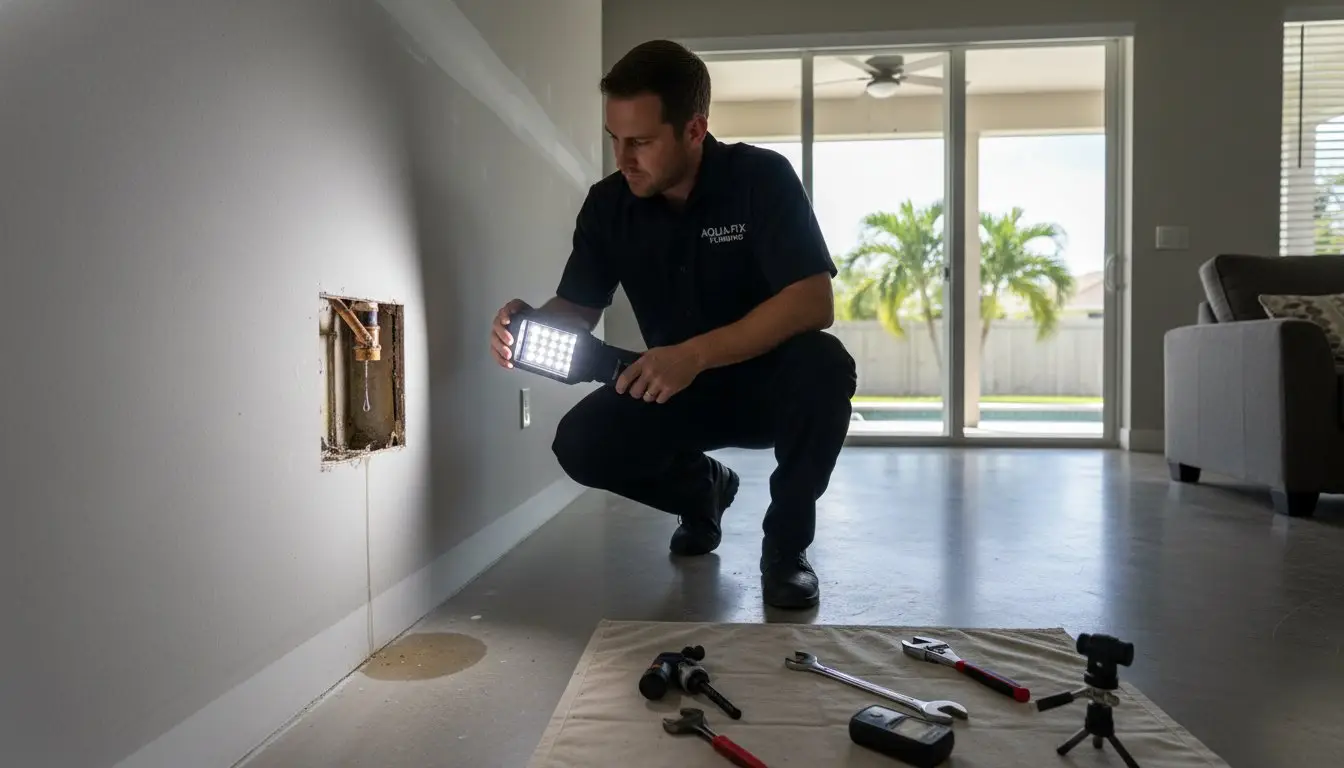
You walk into your living room in Port St. Lucie and notice a faint, musty scent or a soft spot on the drywall that wasn’t there yesterday. It’s a sinking feeling because you know that small stain is just the tip of the iceberg. Most homeowners feel a wave of anxiety when they start searching for the water leak behind wall repair cost, fearing that a hidden pipe failure will lead to an open-ended bill and weeks of construction. It’s frustrating to feel like you’re at the mercy of a problem you can’t even see.
We understand that your home is your biggest investment, and the threat of mold in our humid Florida climate makes every hour count. This guide provides a clear breakdown of the variables that drive the final invoice, helping you distinguish between simple pipe fixes and complex structural restoration. You’ll learn how to stop the damage immediately, what to expect during the professional detection process, and how to choose a reliable Treasure Coast expert who values honesty over high-pressure sales tactics.
Key Takeaways
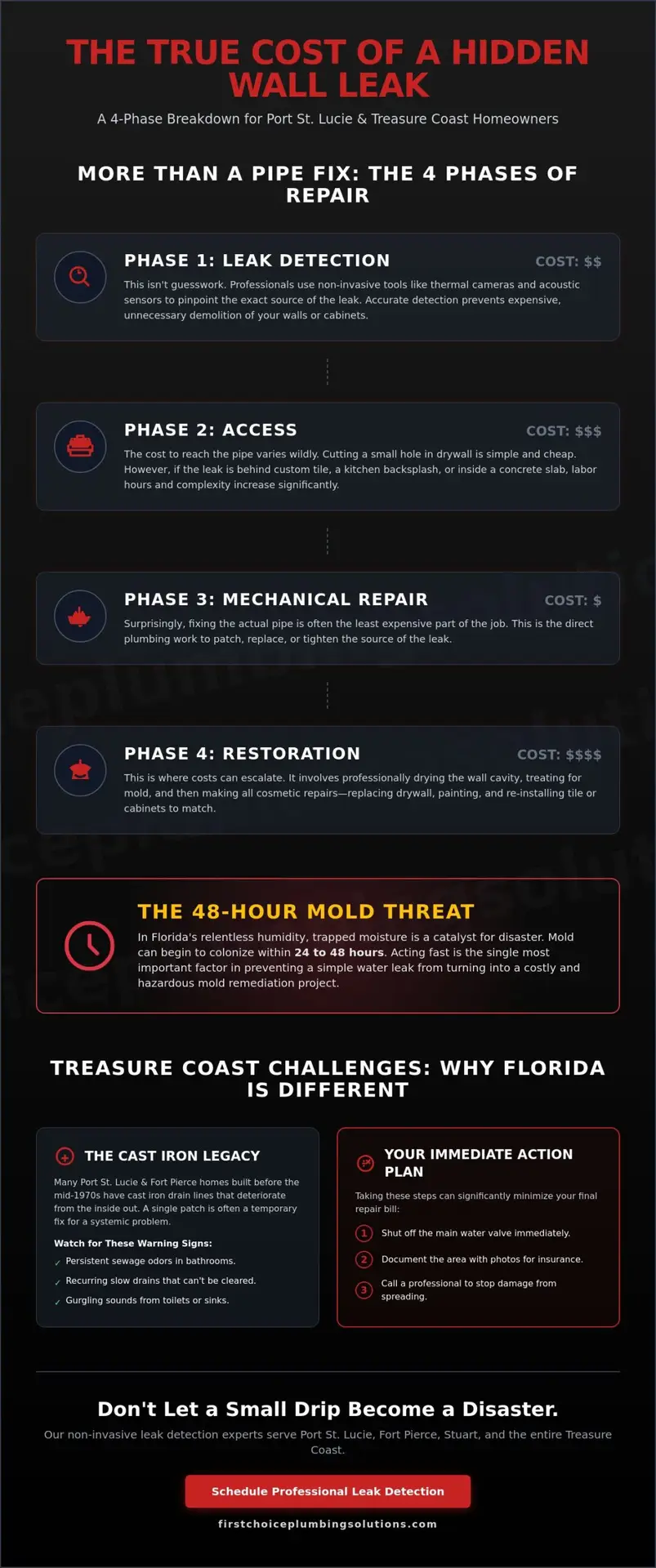
- Understand that the total water leak behind wall repair cost is a combination of four distinct phases: professional detection, wall access, the mechanical pipe repair, and final structural restoration.
- Prioritize non-invasive leak detection to pinpoint the source accurately, which prevents expensive and unnecessary “exploratory” demolition of your drywall or cabinetry.
- Act within the critical 48-hour window to mitigate Treasure Coast humidity, as delayed repairs often lead to secondary mold growth that can significantly increase your restoration bill.
- Recognize how local factors, such as the aging cast iron plumbing found in many Port St. Lucie and Fort Pierce homes, influence the complexity and scope of necessary repairs.
- Minimize your final invoice by taking immediate damage control steps, like shutting off the main water valve and documenting the area for insurance before a professional arrives.
Breaking Down the Cost Components of a Wall Leak Repair
Many homeowners are surprised to find that the mechanical fix of a pipe is often the smallest portion of their total invoice. When calculating your water leak behind wall repair cost, you must view the project as a four-part process: detection, access, mechanical repair, and restoration. Skipping the first step or rushing the second usually leads to a much higher bill at the end. Each phase requires different skills and tools, meaning the final cost is a sum of these distinct professional services.
This methodical approach to budgeting is standard for all major plumbing repairs; for instance, Alberto Pro Plumbing provides similar insights into septic system repair costs, illustrating how professional evaluation helps homeowners avoid hidden financial surprises.
Detection vs. Repair: Why You Pay for Both
Finding a leak through several inches of drywall or behind a kitchen backsplash requires specialized equipment. A professional leak detection expert uses tools like thermal imaging cameras and acoustic sensors to “see” and “hear” the water through the wall. You pay a specific fee for this expertise because it eliminates “exploratory” demolition. Precise detection reduces the “Access” portion of the bill by ensuring we only cut where absolutely necessary, saving you from unnecessary structural repairs later.
The ‘Access’ Variable: Drywall vs. Hard Surfaces
The labor involved in reaching the pipe varies wildly based on your home’s finishes. Cutting a small square of drywall in a hallway is a quick, straightforward task. However, if the leak is behind custom cabinetry or a decorative tile backsplash, the labor hours increase significantly. In many Treasure Coast homes, we find that leaks often occur right where the pipe enters the concrete slab. These transitions require precision to reach without damaging the surrounding foundation. Once the mechanical fix is complete, the Water damage restoration phase begins. This involves drying out the wall cavity to prevent mold growth before any cosmetic repairs, like painting or tiling, can even start.
Local Factors That Influence Your Bill in the Treasure Coast
Living in Florida changes the math for home maintenance. While national guides focus on frozen pipes, Treasure Coast homeowners face entirely different challenges. Your water leak behind wall repair cost is heavily dictated by our specific environment and the era your home was built. Whether you’re in an established neighborhood in Fort Pierce or a newer development in Tradition, local variables like salt air corrosion and extreme humidity play a massive role in the final invoice.
The Cast Iron Legacy in Older Florida Homes
Many homes built before the mid-1970s in Port St. Lucie and Fort Pierce rely on cast iron drain lines. These pipes don’t just leak; they deteriorate from the inside out. Patching a single hole in a cast iron line is often a temporary and expensive mistake because the rest of the pipe is likely just as thin. If you live in neighborhoods like St. Lucie West or the older sections of Stuart, watch for these signs of systemic failure:
- Persistent sewage odors in bathrooms or laundry rooms.
- Recurring slow drains that don’t respond to standard cleaning.
- Gurgling sounds when flushing toilets or running the sink.
In these cases, repiping a house is frequently the more cost-effective long-term solution compared to chasing leaks every few months. Local building codes in Martin and St. Lucie counties require specific permits for these major overhauls, adding a small but necessary fee to ensure the work is up to modern safety standards.
Humidity and the Hidden Cost of Mold
Our climate is relentless. When water is trapped behind a wall in 90-degree heat, it creates a perfect incubator for fungal growth. Research indicates that mold can begin to colonize within 24 to 48 hours of moisture exposure. If you wait even a few days to address a small damp spot, your restoration costs will quickly dwarf the actual plumbing repair bill. Remediation involves specialized drying equipment and antimicrobial treatments, which are essential to protect your family’s health. If you suspect a hidden issue, our team can provide a professional plumbing inspection to catch the problem before it becomes a structural emergency.
How to Minimize Costs and When to Call a Professional
Whether you’re dealing with a sudden burst in Stuart or a slow seepage in Palm City, controlling the situation immediately keeps your final water leak behind wall repair cost as low as possible. Most high restoration bills don’t stem from the plumbing labor itself. Instead, they come from the secondary damage that occurs while the water is still active. Taking decisive action in the first thirty minutes can save you thousands in structural repairs and deep-drying services. Focus on damage control before you even pick up the phone.
The Homeowner’s Emergency Action Plan
- Step 1: Locate and turn off your home’s main water shut-off valve. If you aren’t sure where it is, check near the perimeter of your house or by the water meter.
- Step 2: Take clear, well-lit photos of the affected wall, the floor, and any pooling water. This documentation is vital for insurance adjusters to verify the timeline and extent of the damage.
- Step 3: Call a local expert with 24/7 availability in the Treasure Coast to ensure a technician arrives before the moisture seeps into your subflooring or baseboards.
Why Professional Repairs Pay for Themselves
Homeowners in Port St. Lucie and Jensen Beach often consider DIY fixes after reading online forums. However, using “quick-fix” clamps or improper epoxy is a false economy. These temporary solutions often fail under the pressure of Florida’s municipal water systems, leading to a catastrophic burst later. A licensed, insured plumber provides the peace of mind that comes with a professional warranty. Our team also acts as a restoration-ready partner, providing the technical documentation required for successful insurance claims. If an emergency catches you off guard, you can explore plumbing offers and financing to manage the investment without delaying essential repairs. Don’t let a small drip turn into a major renovation. Contact First Choice Plus Plumbing & Air for expert leak detection today to protect your home and your wallet.
Protect Your Treasure Coast Home Today
A hidden leak doesn’t have to result in a financial disaster. By understanding that your water leak behind wall repair cost is a combination of specialized detection and structural restoration, you can make informed decisions that save money in the long run. Remember that speed is your best defense against Florida’s humidity; stopping a leak within the first 48 hours is the most effective way to avoid expensive mold remediation. Relying on professional detection ensures that your walls stay intact and your repairs are documented properly for insurance purposes.
Our team has been serving the Treasure Coast since 2007, providing the calm competence you need during a plumbing emergency. With 24/7 emergency service and licensed master plumbers ready to help, we focus on resolving the issue quickly and honestly. Don’t let a small damp spot compromise your family’s comfort or your home’s value. Schedule Your Professional Leak Detection in Port St. Lucie Now. We are here to help you get your home back to normal.
Frequently Asked Questions
Does homeowners insurance cover the cost of a water leak behind the wall?
Most homeowners insurance policies cover sudden and accidental water damage; however, they rarely pay for gradual leaks caused by long-term neglect. If a pipe bursts unexpectedly, your policy usually covers the water damage restoration and the cost to access the pipe. It’s important to review your specific coverage limits for “tear-out and replacement” to see if your water leak behind wall repair cost is fully protected under your current plan.
How do I know if a leak is behind the wall or under the slab?
Wall leaks typically present with visible symptoms like damp drywall, bubbling paint, or a musty smell emanating from a specific room. In contrast, a slab leak often causes warm spots on your tile or vinyl flooring and may lead to water pooling at the base of your home’s exterior foundation. If your water meter is spinning but you see no visible damage on the walls, the issue is likely located beneath the concrete.
Is it worth fixing a single leak in an old pipe, or should I repipe the whole house?
A full repipe is often the smarter choice if your home is over 40 years old or contains original cast iron lines. Patching a single leak in a deteriorating system frequently leads to a “domino effect” where new leaks appear elsewhere shortly after the first repair. Investing in a whole-house solution eliminates the recurring water leak behind wall repair cost and provides long-term security for your Port St. Lucie property.
What are the first signs of a hidden water leak I should look for?
Watch for an unexplained increase in your monthly utility bill or the sound of rushing water when every faucet in the house is closed. You should also inspect your walls for discolored patches, peeling wallpaper, or baseboards that feel soft to the touch. In our humid Florida environment, a sudden spike in mold growth or a lingering musty odor is a definitive warning sign that moisture is trapped behind your drywall.

Article by
Written by First Choice Plus Plumbing & Air Team
This article was created by the team at First Choice Plumbing Solutions, a licensed and experienced plumbing and HVAC company serving Port St. Lucie, Land O’ Lakes, and surrounding areas.
Our team specializes in plumbing and air conditioning services, including drain cleaning, leak detection, water heater repair and installation, AC repair, maintenance, and system installations. Our content is based on real-world experience and the common issues we solve for homeowners and businesses every day.
We aim to provide accurate, helpful, and easy-to-understand information so you can make informed decisions about your plumbing and HVAC needs.
If you need reliable, professional service, First Choice Plumbing Solutions is here to help.
Disclaimer
Disclaimer: The information provided in this article is for general informational purposes only and does not constitute professional plumbing or HVAC advice. Every situation is different, and readers should consult a licensed professional for proper diagnosis and repair. First Choice Plus Plumbing & Air is not liable for any damages or losses resulting from the use of this information.