
That small, discolored patch on your drywall might look like a minor cosmetic issue, but in the humid climate of the Treasure Coast, it’s often the first warning of a much larger problem. Learning the signs of hidden water leak in ceiling structures early can be the difference between a simple patch and a full-scale restoration project. Whether you’re in Port St. Lucie or Jensen Beach, catching these subtle cues is essential for protecting your home’s value and your family’s health.
We know the immediate anxiety that comes with spotting a new stain. You’re likely wondering if you need a roofer, a plumber, or an AC technician, while worrying about hidden mold or the cost of a major repair. This guide will help you accurately identify the source of the moisture so you can act before the damage spreads. We’ll break down the seven most common indicators of a leak, explain why Florida’s humidity makes timing critical, and help you decide exactly when it’s time to call in a trusted local expert for a professional fix.
Key Takeaways
- Learn how to distinguish between common yellow stains and more urgent copper-colored indicators that signal an active plumbing failure.
- Discover the seven most reliable signs of hidden water leak in ceiling surfaces that Treasure Coast homeowners often overlook until mold begins to form.
- Identify why a clogged AC condensate line is one of the most frequent causes of ceiling damage in Port St. Lucie and how to spot it early.
- Understand how professional non-invasive tools like moisture meters and thermal imaging find the leak source without unnecessary drywall destruction.
- Gain the confidence to determine whether you need a plumber, a roofer, or an AC technician to resolve your specific water intrusion issue.
Visual and Auditory Signs of a Hidden Water Leak in Your Ceiling
Identifying the early signs of hidden water leak in ceiling materials can save you thousands in structural repairs. While a massive puddle is obvious, the most dangerous leaks often start as whispers. You might notice paint that looks slightly “blistered” or wallpaper that begins to peel away from the drywall. These texture changes happen because moisture is trapped between the paint layer and the ceiling board. If you ignore these, the drywall will eventually lose its structural integrity, leading to noticeable sagging or soft spots that are prone to sudden collapse. This type of water damage often hides mold growth in the dark, humid space between floors.
The Color Code of Ceiling Leaks
The hue of a ceiling stain tells a story about its source. A light yellow or tan ring usually points to a fresh leak from a clean water line or an AC drain pan. If you see dark brown or copper-colored spots, it often indicates water is traveling through rusted metal or aging cast iron pipes. If you are dealing with older plumbing in your Treasure Coast home, you may eventually need leak detection and repair to address the root cause. Efflorescence is a white, powdery residue left behind by evaporating water that has leached minerals from building materials.
Listening for the Hidden Drip
Sometimes your ears will catch a problem before your eyes do. Listen for a steady “ticking” or “clicking” sound in the ceiling, especially after someone uses a shower or flushes a toilet. This is often the sound of water dripping onto the back of a drywall panel. If you suspect a leak but can’t see it yet, place a simple drinking glass against the ceiling and press your ear to the bottom; the glass acts as a natural amplifier to help you track the sound to its source. Paying attention to these auditory signs of hidden water leak in ceiling structures can help you pinpoint the issue before the drywall fails.
Common Sources of Ceiling Leaks in Port St. Lucie Homes
In Port St. Lucie, the most common culprit for ceiling damage isn’t always a pipe burst; it’s often your air conditioner. Many local homes in neighborhoods like St. Lucie West or Traditions feature air handlers tucked away in attics or upper-floor closets. When the humidity spikes, your AC works overtime, creating massive amounts of condensation. If the drain line clogs with algae or mineral buildup, that water has nowhere to go but down through your drywall. This creates localized signs of hidden water leak in ceiling areas directly beneath or adjacent to your cooling equipment.
Beyond the AC, second-story bathrooms are frequent offenders. A failing wax ring under a toilet or a hairline crack in a shower pan can send water creeping along floor joists, appearing far from the actual source. These are often “ghost” leaks that only manifest when a guest takes a long shower or you run a heavy load of laundry. To effectively chase down leaks, you must observe when the moisture actually appears. If a stain only grows after a heavy Florida downpour, your roofer is the likely solution. If the spot stays damp during a dry spell, you’re dealing with a plumbing or mechanical failure.
Is it the AC or the Pipes?
Check your secondary drain pan located under the indoor air handler. If you see standing water or rust, your condensate line is likely blocked. For homeowners in Port St. Lucie, this is a frequent emergency during the summer months. If you find water pooling near your unit, you likely need emergency AC repair to clear the line and prevent a total ceiling collapse. Beyond immediate fixes, you may want to explore Residential Plumbing and HVAC Repair Services options to find experts who focus on system longevity and preventative care.
The Role of Humidity and Mold
In Jensen Beach and Stuart, the clock starts ticking the moment moisture hits your drywall. Our local humidity levels mean mold can begin to colonize within 24 to 48 hours. Ignoring the signs of hidden water leak in ceiling spaces doesn’t just damage the structure; it compromises your indoor air quality. If you can’t find the source immediately, seeking professional leak detection and repair is the best way to protect your home’s value.

Professional Leak Detection: How to Stop the Damage
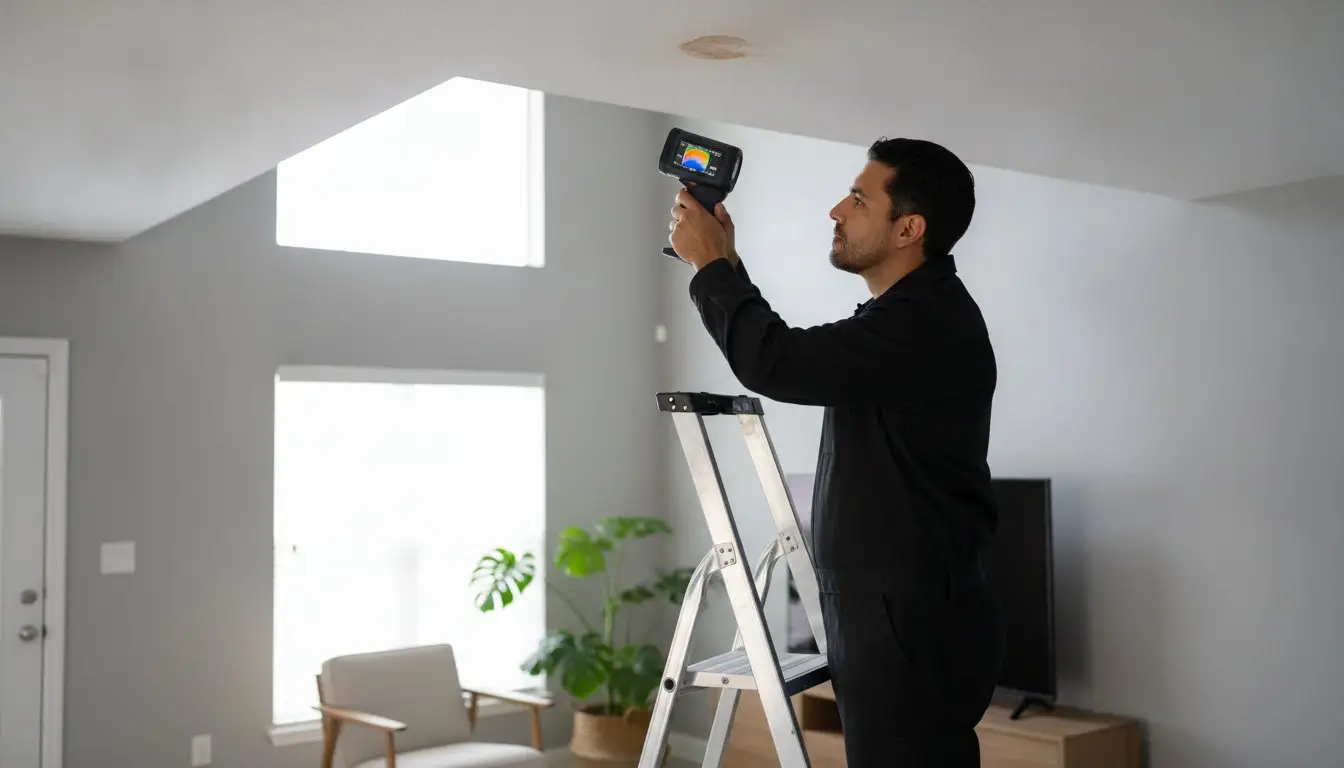
Once you’ve spotted the signs of hidden water leak in ceiling materials, the priority shifts to finding the exact source without unnecessary destruction. Professional leak detection has evolved far beyond the old method of cutting random holes in your drywall. We use high-sensitivity moisture meters and thermal imaging cameras to “see” through your ceiling. These tools detect temperature differentials that indicate moisture, allowing us to map the water’s path back to a pinhole pipe leak or a failing AC drain. It’s not just about the equipment; it’s about the expertise needed to interpret the data and avoid misdiagnosing a simple plumbing issue as a major structural failure.
Our technicians also perform pressure testing to determine if the problem lies within your supply lines or the drainage system. If the leak is on the supply side, the water flows constantly, which requires immediate intervention to prevent a collapse. Depending on the age and condition of your pipes, the solution might range from a localized patch to a whole house repipe if your plumbing has reached the end of its lifespan. If you spot a leak, follow this immediate checklist:
- Shut off the main water valve if the leak is active and steady.
- Clear furniture and electronics from the area beneath the drip.
- Take clear, dated photos of the ceiling stain and any floor puddles.
- Place a bucket under the drip, but don’t let it get too heavy before emptying.
The First Choice Plus Diagnostic Process
We take a master craftsman approach to every home in Port St. Lucie and Fort Pierce. Our team is known for being clean, punctual, and completely transparent about repair costs. Because water damage doesn’t follow a schedule, we maintain 24/7 availability to ensure your home stays protected during a midnight plumbing emergency.
Next Steps and Insurance Tips
In Florida, documenting damage quickly is essential for insurance purposes. Take photos before any repairs begin to help with potential claims, as insurers often look for proof that the damage was sudden rather than gradual. If you’re unsure where the water is coming from, contact our leak detection experts today for a professional inspection and a permanent solution.
Protect Your Treasure Coast Home from Water Damage
Catching the signs of hidden water leak in ceiling materials early is the best way to avoid structural failure and mold growth in our humid Florida environment. By watching for subtle texture changes like bubbling paint and listening for quiet ticking sounds, you can identify a problem before it becomes a restoration nightmare. Remember that in neighborhoods across Palm City and St. Lucie West, your air conditioner is just as likely to be the source of moisture as your bathroom plumbing.
Since 2007, First Choice Plus Plumbing & Air has served as the Treasure Coast’s expert slab leak and hidden leak specialists. We provide 24/7 emergency service to ensure you never have to face a ceiling collapse alone. Our master craftsmen use non-invasive technology to pinpoint the exact source of moisture without tearing apart your home. If you’ve noticed a suspicious spot or a strange sound, don’t wait for the drywall to fail.
Schedule your professional leak detection in Port St. Lucie today to get an honest assessment and a permanent fix. We’re here to help you keep your home dry, safe, and comfortable for the long term.
Frequently Asked Questions
How can I tell if a ceiling leak is active or old?
An active leak feels cool or damp to the touch, while an old leak is usually dry and brittle. You can circle the stain with a pencil to see if it grows over the next 24 hours. If the spot is soft or has a “shimmering” appearance under a flashlight, water is currently present. Old stains often have a dark, crusty perimeter but don’t change in size or texture during a rainstorm.
Will a ceiling leak cause the drywall to collapse?
Persistent moisture will eventually cause drywall to lose its structural strength and collapse. Drywall acts like a sponge, becoming extremely heavy as it absorbs water. If you notice a “pillowing” effect or a significant sag, the ceiling is at risk of falling. Identifying the signs of hidden water leak in ceiling boards early is crucial to prevent the weight of the water from pulling the entire panel down.
Does homeowners insurance usually cover hidden water leaks?
Most homeowners insurance policies cover leaks that are “sudden and accidental,” such as a burst pipe. However, coverage is often denied for gradual damage caused by long-term seepage or lack of maintenance. In 2026, Florida insurers are increasingly scrutinizing claims to distinguish between maintenance issues and true emergencies. Always document the damage with photos immediately to support your claim and consult your specific policy for local coverage limits.
Can an AC unit cause water to leak from the ceiling?
A clogged AC condensate line is one of the most frequent causes of ceiling water damage in Treasure Coast homes. When the drain line becomes blocked by algae or debris, the condensation from your air handler overflows the safety pan. This water then seeps into the attic floor and through the ceiling below. It is a common source of the signs of hidden water leak in ceiling areas located near air vents or utility closets.

Article by
Written by First Choice Plus Plumbing & Air Team
This article was created by the team at First Choice Plumbing Solutions, a licensed and experienced plumbing and HVAC company serving Port St. Lucie, Land O’ Lakes, and surrounding areas.
Our team specializes in plumbing and air conditioning services, including drain cleaning, leak detection, water heater repair and installation, AC repair, maintenance, and system installations. Our content is based on real-world experience and the common issues we solve for homeowners and businesses every day.
We aim to provide accurate, helpful, and easy-to-understand information so you can make informed decisions about your plumbing and HVAC needs.
If you need reliable, professional service, First Choice Plumbing Solutions is here to help.
Disclaimer
Disclaimer: The information provided in this article is for general informational purposes only and does not constitute professional plumbing or HVAC advice. Every situation is different, and readers should consult a licensed professional for proper diagnosis and repair. First Choice Plus Plumbing & Air is not liable for any damages or losses resulting from the use of this information.